



Chat Marketing and Automation: How Instant Messaging Is Changing Digital Engagement
- What Is Chat Marketing and Chat Automation?
- Benefits of Chat Automation for Your Business
- How Chat Automation Works: Use Cases and Triggers
- Chat Marketing Channels That Work in 2025
- Tools and Platforms to Launch Your Chat Marketing Strategy
- Getting Started: Chat Automation in 5 Steps
- Metrics That Matter: How to Measure Success
- Challenges of Chat Automation (And How to Solve Them)
- The Future of Instant Messaging Marketing
- Conclusion: Time to Start the Conversation
- Want to turn DMs into deals?
Today’s customers don’t want to wait. They don’t want to send an email and hope for a reply tomorrow. They expect answers now—sometimes within seconds. And the businesses that can meet them in that moment, in the right tone and channel, win.
That’s exactly where chat marketing and instant messaging step in. Instead of pushing one-size-fits-all campaigns, chat-first brands build real conversations. They reply to DMs, automate replies, and turn every interaction into a potential sale.
In this article, we’ll break down what chat marketing is, how automation fits into it, and how your business can use this strategy to boost engagement, support, and conversions.
What Is Chat Marketing and Chat Automation?
Chat marketing is the strategy of connecting with your audience through direct, real-time messaging—often via social media DMs, messaging apps, or embedded chat widgets on your site.
Unlike traditional email blasts or static ads, chat marketing is more personal. It mimics natural conversation and can happen one-on-one in apps your audience already uses—like Instagram, WhatsApp, or Messenger.
Chat automation takes that further. It uses predefined flows, auto-replies, and triggers to respond instantly, without needing a live person on the other end. For example, someone comments “I want this” under your post—and your automation instantly opens a DM with a discount code or product link.
This isn’t about replacing humans. It’s about scaling your brand’s ability to respond quickly, consistently, and contextually—without burning out your team.
Benefits of Chat Automation for Your Business
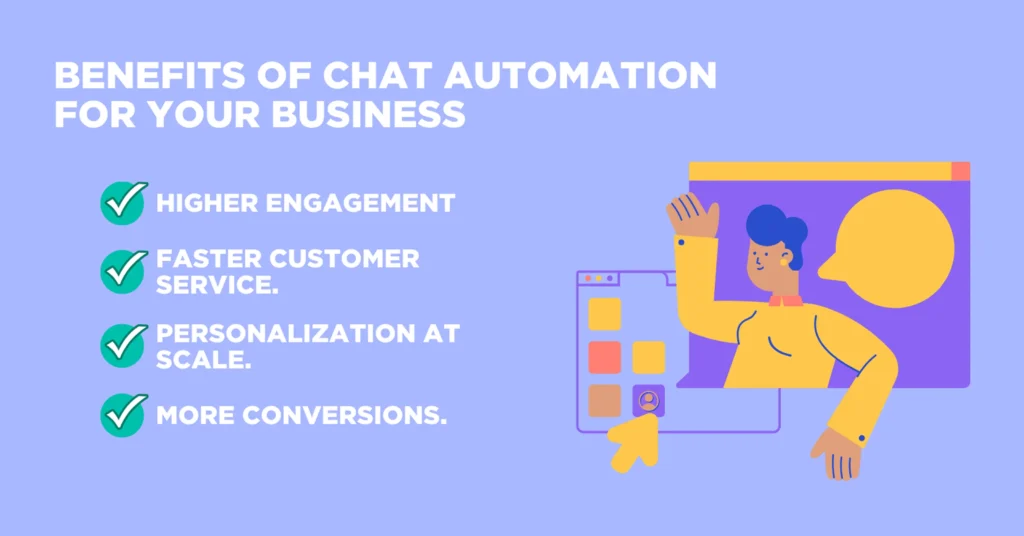
Done right, chat automation feels like magic—for you and your customers. Here’s what it can unlock:
- Higher engagement. Responding in real time keeps people interacting longer—and makes them more likely to come back.
- Faster customer service. No more waiting on form submissions or delayed emails. Clients get answers immediately.
- Personalization at scale. You can greet users by name, suggest products based on behavior, and tailor messages—all automatically.
- More conversions. Turning comments into private messages creates space for deals, upsells, and faster decision-making.
Imagine a potential customer asking about sizing in a DM and getting a helpful, branded reply within seconds—followed by a “shop now” button. That’s chat marketing in action.
How Chat Automation Works: Use Cases and Triggers
So how does it actually work?
Chat automation uses simple rules or AI-powered triggers to start conversations or send replies based on specific actions.
Common triggers include:
- Keywords in a comment (e.g., “price” triggers an instant DM)
- Emoji reactions (like replying to a Story with 🔥)
- Clicking a button or quick reply in a chat
- Inactivity (e.g., no response for 1 day triggers a follow-up message)
Key platforms:
Facebook & Instagram
Auto-replies in Messenger and DMs, triggered by comments, Stories, or keyword messages.
WhatsApp & Telegram
Automated replies, broadcasts, and interactive flows using approved bots or business APIs.
On your website
Live chat widgets that offer real-time replies, FAQ buttons, lead capture, and support handoffs.
Whether it’s a product inquiry, a follow-up offer, or even automated payments, automation makes sure the right message lands in the right chat—without delay.
Chat Marketing Channels That Work in 2025
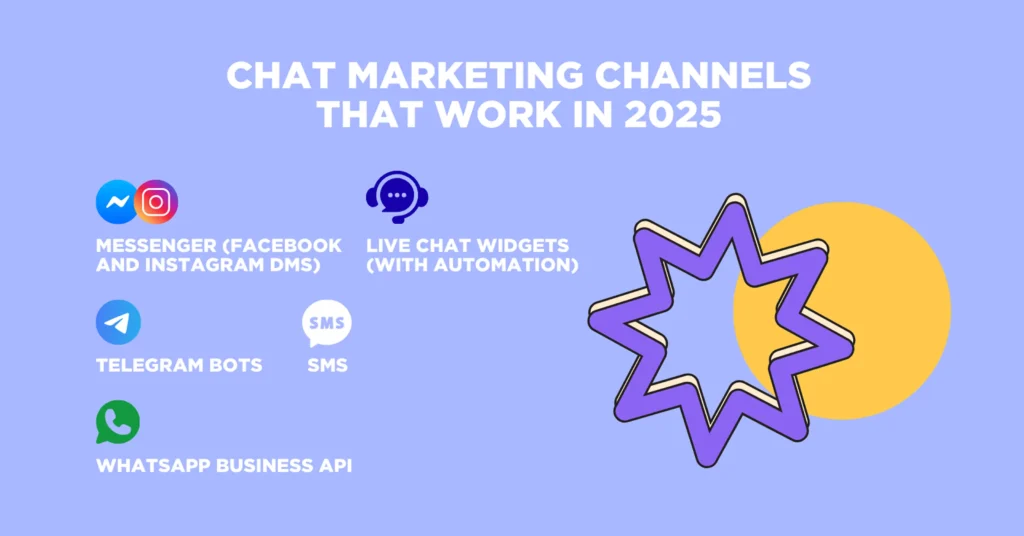
In today’s digital landscape, many businesses still rely on outdated communication tools like emails or clunky website builders with generic chat widgets. But to stay competitive, you need modern messaging platforms that actually perform. Here’s where chat marketing is driving results in 2025:
- Messenger (Facebook and Instagram DMs). Still one of the most interactive spaces for retail, service, and influencer-driven sales.
- WhatsApp Business API. Especially effective in Europe, Latin America, and service industries. Now with better automation capabilities.
- Telegram bots. Popular with communities, tech brands, and subscription-based services. Great for long-form content and sequences.
- Live chat widgets (with automation). Embedded on your site to capture leads, answer FAQs, and qualify visitors in real-time.
- SMS. Less popular but still useful for reminders, confirmations, or fallback when apps fail.
Tools and Platforms to Launch Your Chat Marketing Strategy
When choosing your tech stack, think function over flash. Your platform should make it easy to build flows, segment users, and respond in real time—without writing code.
What to look for:
- Native integrations with your CRM, CMS, or ad platform
- Customization: buttons, tags, logic trees, media, etc.
- Support for triggers and automated sequences
- Collaboration tools for teams (multiple agents, handoffs)
- Transparent pricing and active support
Examples worth exploring:
- ManyChat – Popular for Instagram and Facebook DM flows
- SendPulse – Good for multichannel (chat, email, SMS)
- Tidio – Excellent live chat with automation features
- Flow XO – Visual flow builder for Telegram and web chat
Getting Started: Chat Automation in 5 Steps
Launching your first chat automation flow is easier than you think. Follow these core steps:
- Identify where conversations start.
Is it in Instagram comments? Website chat? WhatsApp inquiries? - Set up automated responses for top questions.
These include pricing, availability, location, and general FAQs. - Add action buttons or quick replies.
Let users click to visit a product, schedule a call, or get a promo. - Connect analytics tools.
Track how users interact with messages and where they drop off. - Test, adjust, and keep iterating.
Start small, watch behavior, and build smarter sequences over time.
Automation isn’t “set it and forget it.” Think of it as a living part of your brand experience.
Metrics That Matter: How to Measure Success
Tracking results in chat marketing isn’t the same as email—but it can be even more insightful.
Key performance metrics:
- Open rate
Most messaging platforms still see 70–90% open rates within minutes. - Click-through rate (CTR)
Whether users tap your call-to-action or ignore it. - Response time
Even with automation, fast human replies still matter for high-intent leads. - Conversion rate
How many chats lead to signups, purchases, or bookings. - Customer satisfactio
Quick polls or feedback buttons right in the chat window can give real-time insight.
Challenges of Chat Automation (And How to Solve Them)
As powerful as chat automation is, it’s not without its hurdles.
Common issues:
- Messaging app restrictions
Platforms like Meta limit message frequency or block unapproved campaigns. Use approved templates and follow the rules. - Responses feel robotic
Overuse of generic phrases can make users drop off. Keep tone friendly and human—even if it’s pre-written. - Language limitations
If you have multilingual audiences, use platforms that support branching logic or user language detection. - Handoffs break
If the bot doesn’t clearly switch to a human when needed, users get frustrated. Always include an “ask a person” option.
The Future of Instant Messaging Marketing
Looking ahead, chat marketing is moving beyond simple flows and into smarter, AI-driven conversations.
What’s emerging now:
- AI chat assistants that learn over time
Real-time learning from customer behavior and tone. - Automated video replies
Sending short branded video answers to FAQs. - Full CRM and ad integration
Syncing chats with HubSpot, Meta Ads, and email tools. - Omnichannel chat hubs
One interface to manage Instagram, WhatsApp, live chat, and more—all in one view.
Instant messaging is becoming the control center of customer experience. Whether you’re running a DTC brand, SaaS, or marketplace, chat-first automation gives you a direct line to the people who matter most.
Conclusion: Time to Start the Conversation
Chat marketing isn’t a fad—it’s a shift in how people expect to connect with businesses. It’s fast, it’s personal, and when done right, it converts.
The sooner you start building these systems, the more of an edge you’ll have—especially as competitors stay stuck in slow forms and inboxes. And if you’re aiming to be among the best startup brands in your space, instant messaging is where differentiation starts.
Just remember: automation doesn’t mean cold or robotic. The best chat experiences feel like someone’s already waiting to help—at scale.
Want to turn DMs into deals?
We help businesses build smart, branded chat automations that actually convert. Whether you need a first flow or a complete messaging strategy, we’re here to help. Let’s talk.

Free website strategy session with a senior web expert
For over a decade, we’ve helped startups, SaaS companies, and service brands build high-performing websites that drive real results. Whether you’re planning a redesign, launching a new product, or need to scale your platform—our technical and UX expertise can help you move faster and smarter.
Ready to talk? Connect with a lead developer at Hutko.dev for a FREE 30-minute strategy call. Let’s map out your next step, together.
Book a Free Call
