



iPhone vs Android: Understanding the Users, the Platforms, and What’s Best for Your App

- Global and Regional Market Share: Android vs iPhone in 2025
- iPhone vs Android: Hardware and Software Comparison
- Consumer Behavior and Demographics: Who Uses What?
- Spending Patterns and Revenue Potential: Which Platform Pays Off?
- AI and Security: Apple vs Android in the Age of Smart Devices
- Should we launch on iOS or Android first?
- iOS and Android: A Developer’s Take on Key Differences
- Conclusion: It’s Not a Platform War—It’s a User Strategy
- Need help choosing the right platform for your app idea?
Ask ten people which phone they use—and you’ll likely spark a passionate debate. But if you’re building an app or launching a mobile-first product, the choice between iPhone and Android isn’t about personal taste. It’s a strategic decision that can shape how your business grows.
Every platform comes with its own audience, expectations, and trade-offs. Do you want more reach or more revenue per user? Are your customers mostly in the U.S., or are you aiming for global traction? Questions like “Are there more Android or iPhone users in the US?” or “Which platform brings in more paying users?” aren’t just trivia—they’re at the heart of smart product planning.
Choosing where to start isn’t always obvious—but it matters more than most teams think.
Global and Regional Market Share: Android vs iPhone in 2025
Globally, Android runs the show, holding around 70% of the smartphone market. But zoom in on specific regions, and the story changes.
In the U.S., iPhones have a clear edge—recent numbers show that over half of American smartphone users are on iOS. The same trend plays out in Japan, where Apple dominates even more aggressively. Europe, on the other hand, leans the other way: Android holds a strong majority there, with iOS making up roughly a third of the market.
What does that mean for your product? Simple: while Android gives you broader global reach, iOS tends to lead in wealthier, higher-spending markets. And if you’re thinking about early traction or monetization, that difference really starts to matter.
iPhone vs Android: Hardware and Software Comparison
If you’ve used both platforms, you know the experience isn’t just about hardware—it’s how the software plays with it.
Android is all about customization. Want to rearrange everything, sideload an app, or use widgets that overhaul your entire home screen? Android says go for it.
iOS, on the other hand, delivers a more unified and polished experience. Apple controls the hardware and software, leading to tighter integration and more consistent UX across devices.
When it comes to publishing apps, Apple is famously strict. The App Store review process is longer and requires more compliance with guidelines. Google Play is more flexible, which can be a double-edged sword depending on your goals.
Consumer Behavior and Demographics: Who Uses What?
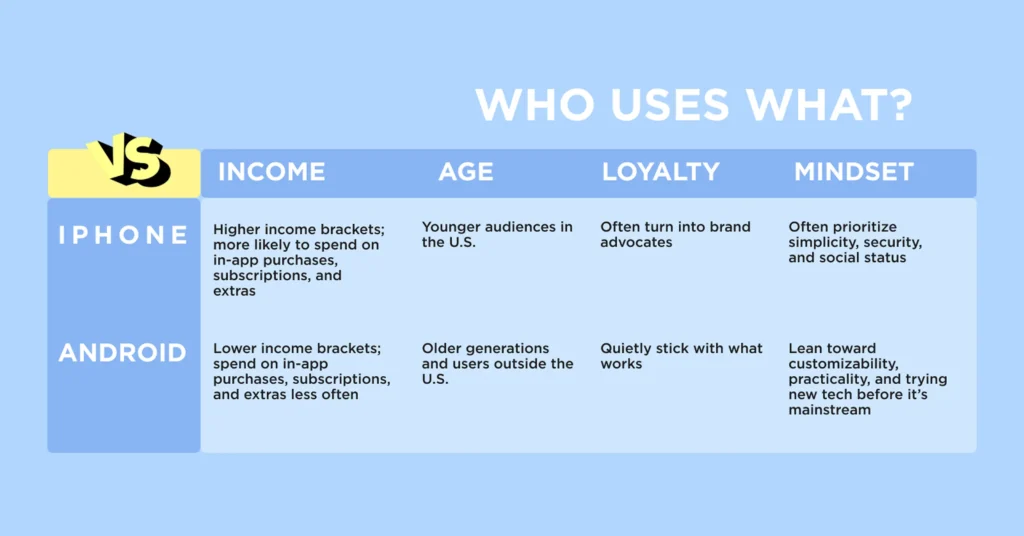
Let’s break down what really sets iPhone and Android users apart.
Income: In general, iPhone owners tend to come from higher income brackets. They’re also more likely to spend on in-app purchases, subscriptions, and extras.
Age: Younger audiences in the U.S.—especially teens and college students—often stick with iPhones, mostly because of iMessage and FaceTime. On the other hand, Android is a favorite among older generations and users outside the U.S.
Loyalty: While Android users quietly stick with what works, Apple users often turn into brand advocates. It’s not just a phone—it’s part of their identity.
Mindset: iPhone users often prioritize simplicity, security, and social status. Android fans lean toward customizability, practicality, and trying new tech before it’s mainstream.
Need help deciding where your app belongs?
Choosing between iOS and Android isn’t just about code—it’s about users, behavior, and long-term growth. If you’re working on a new product or scaling your idea beyond just a startup website, we’re here to help.
We design and build custom mobile apps that align with your audience—whether that means Apple, Android, or both. Let’s chat and figure out what fits your strategy best.
Spending Patterns and Revenue Potential: Which Platform Pays Off?
Let’s talk money.
Apps on iOS generate more revenue per user. Whether it’s in-app purchases, subscriptions, or premium pricing—Apple users are more likely to pay. Apple’s App Store brought in more than double the revenue of Google Play in 2024, despite fewer downloads.
But don’t count Android out. Its wider global footprint means higher install volume, especially in emerging markets. That makes Android ideal for ad-supported models or apps focused on reach over revenue.
App Preferences: What iPhone and Android Users Actually Download
When it comes to apps, user preferences vary subtly but significantly between platforms.
iPhone users often download more productivity and social media apps, while Android users favor education, utility, and food & drink categories. Gaming is a massive category across both, but iOS users spend more on in-game purchases.
These patterns reflect not just platform differences but also lifestyle and income brackets—which are crucial insights for product strategy.
AI and Security: Apple vs Android in the Age of Smart Devices
With artificial intelligence becoming a core part of today’s mobile experience, both Apple and Google are doubling down on how they integrate it into their platforms—each with a different approach.
Apple has rolled out Apple Intelligence, focusing heavily on privacy. Features are designed to work seamlessly with Siri and run locally on the device whenever possible, minimizing the need to send data to the cloud. For privacy-conscious users, this is a big win.
Google’s Android, on the other hand, taps into the full power of Google’s AI ecosystem. It delivers smarter suggestions, contextual actions, and flexible tools across the system. But that intelligence often comes with broader data sharing—something that makes some users pause.
While both systems have strong encryption and security protocols, public trust still tends to lean toward Apple. The perception is clear: Apple guards your data, while Google learns from it.
Should we launch on iOS or Android first?
It’s a fair question. You want to validate your MVP, stay lean, and move fast. But the answer, like most things in software, depends on context.
If your target audience includes early adopters, higher-income professionals, or creative markets (think design, wellness, or finance), iOS often gives you better results out of the gate. The ecosystem is tighter, users tend to spend more, and from a dev standpoint, Swift + Xcode is a well-maintained stack with strong support.
On the flip side, if you’re building something for scale—like an educational platform, logistics app, or something aimed at emerging markets—Android gives you reach. It’s not as “tidy” in terms of hardware fragmentation, but frameworks like Kotlin Multiplatform or Jetpack Compose are making Android dev a lot more enjoyable than it was a few years ago.
One thing I always remind clients: if your backend is WordPress-based, integration becomes key. I’ve seen too many teams treat the mobile app as a separate universe, only to run into sync issues with user roles, content flow, or payment logic. If that’s your stack, don’t try to duct-tape it—work with a team that’s done this before. Your best bet? Collaborate with specialists in best WordPress outsourcing to align your app and backend early.
And if you’re going cross-platform (which makes sense for many startups today), React Native and Flutter are solid choices. For clients here in NYC, I often recommend working with teams that already have proven experience delivering hybrid apps under pressure—like this group offering React development services in York. Speed matters, but so does maintainability.
Bottom line? Pick the platform that aligns with your audience, budget, and growth strategy. Don’t follow trends—follow the logic of your product.
Choosing the Right Platform for Your Mobile App in 2025
Here’s the truth: There’s no universally “better” platform. There’s only a better fit for your users.
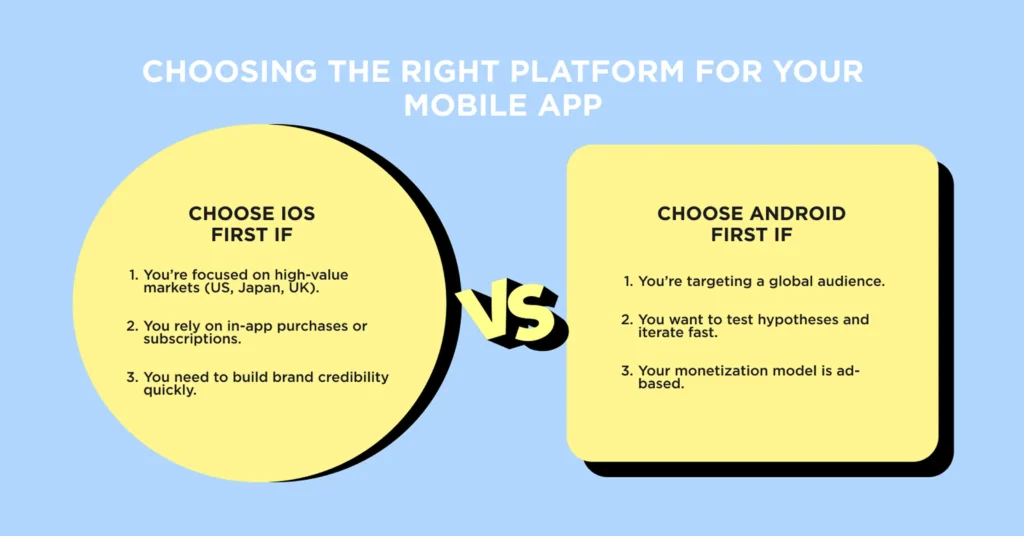
Choose Android first if:
- You’re targeting a global audience.
- You want to test hypotheses and iterate fast.
- Your monetization model is ad-based.
Choose iOS first if:
- You’re focused on high-value markets (US, Japan, UK).
- You rely on in-app purchases or subscriptions.
- You need to build brand credibility quickly.
(Even if your main business is built around web or ecommerce platforms, such as working with an outsourced shopify team new york, mobile platform alignment still matters when expanding functionality.)
Ultimately, this isn’t about “which is better”—it’s about which is better for your product, your market, and your users.
iOS and Android: A Developer’s Take on Key Differences
If you’re deciding where to launch first, here’s a quick breakdown I often share with clients—especially those weighing budgets, audience fit, and tech complexity:
| Feature | iOS | Android |
| Market Share (Global) | ~29% | ~70% |
| US Market Share | ~57% | ~42% |
| Revenue per User | Higher (via purchases) | Lower (higher reach) |
| Development Language | Swift / Objective-C | Kotlin / Java |
| User Demographics | Younger, higher income | Broader age/income range |
| App Review Process | Strict | Flexible |
| Customization | Limited | Extensive |
| Perceived Security | Higher | Lower (despite technical parity) |
| Loyalty | High | Slightly higher retention |
| Monetization Model | Subscriptions / Premium | Ads / Freemium |
From my experience, iOS tends to be the better choice if you’re building for early adopters or need predictable monetization from day one. Android gives you volume and flexibility—especially useful when testing products in varied markets or rolling out freemium models.
Still not sure which route fits your product? I’m happy to walk through real-world scenarios and help you decide where to start—and how to scale across both.
Conclusion: It’s Not a Platform War—It’s a User Strategy
If you’re still asking if the iPhone is better than Android, you might be asking the wrong question.
The real challenge isn’t picking sides. It’s understanding your audience, their preferences, behaviors, and devices—and choosing a platform strategy that supports your business goals.
Plenty of startups begin with just one platform, then expand to the other using cross-platform development once product-market fit is proven. That’s smart, lean, and scalable. Whether you’re a funded startup or a white label laravel agency looking to build mobile integrations, platform selection should follow strategy—not trends.
Need help choosing the right platform for your app idea?
Let’s talk! Our team can help you design, develop, and launch a successful app for iOS, Android, or both. Whether you’re starting small or planning global domination, we’ll help you make the right call.

Free website strategy session with a senior web expert
For over a decade, we’ve helped startups, SaaS companies, and service brands build high-performing websites that drive real results. Whether you’re planning a redesign, launching a new product, or need to scale your platform—our technical and UX expertise can help you move faster and smarter.
Ready to talk? Connect with a lead developer at Hutko.dev for a FREE 30-minute strategy call. Let’s map out your next step, together.
Book a Free Call
