



What Is a White Label Solution? Your 2026 Guide to Scalable Growth

- Why White Label Is on the Rise
- What Is a White Label Solution (And What It’s Not)?
- White Label Business Model Explained
- Benefits of White Labeling for Agencies and SaaS Providers
- Use Cases: Where White Label Solutions Work Best
- How to Choose the Right White Label Partner
- Common Myths About White Labeling (And the Truth)
- From White Label to Market Leader: How to Reach the Top
- Getting Started with White Label: First Steps
- Conclusion: Build Smart, Scale Fast
- Ready to launch your white label service?
Why White Label Is on the Rise
Businesses in 2026 want to move fast. The days of spending months—or even years—building a product from scratch are over for many teams. Growth today often means finding ways to deliver value quickly, without reinventing the wheel.
That’s where white label solutions come in.
They offer agencies, startups, and freelancers a chance to scale their offerings without building software themselves. Whether you’re running a digital agency, launching a SaaS startup, or building tools for a niche audience, white label lets you sell fully branded products under your own name—without touching a single line of code.
This guide will walk you through what white label really means, how it works across industries, and how to launch your own scalable solution in 2026.
What Is a White Label Solution (And What It’s Not)?
A white label solution is a ready-made product or service built by one company that other businesses can rebrand and resell as their own.
In simple terms: someone else builds it—you make it yours.
White label is often confused with private label (more common in eCommerce) or reseller programs (where branding isn’t always customizable). The key difference with white label: your client only sees your name and branding, not the original provider’s.
Examples of white label solutions include:
- CRM or marketing automation platforms
- SEO or analytics dashboards
- Booking systems or appointment software
- Hosting services
- IT help desk or tech support
- eLearning platforms for coaches and consultants
White Label Business Model Explained
So how does the white label model work in practice?
- You choose a white label provider that offers a product or service in your niche.
- You rebrand it with your logo, colors, and domain.
- You sell access to your clients—often bundled with your own services.
- You handle the relationship with your customer (support, onboarding, training).
- The provider continues to maintain the core product behind the scenes.
White label monetization models vary:
- Monthly subscriptions
- One-time access fees
- “Software + services” bundles
- Tiered pricing for added support or features
Who is this model for?
- Digital agencies
- Marketing and web consultants
- SaaS entrepreneurs
- IT service providers
- Solopreneurs and coaches with a niche audience
Benefits of White Labeling for Agencies and SaaS Providers
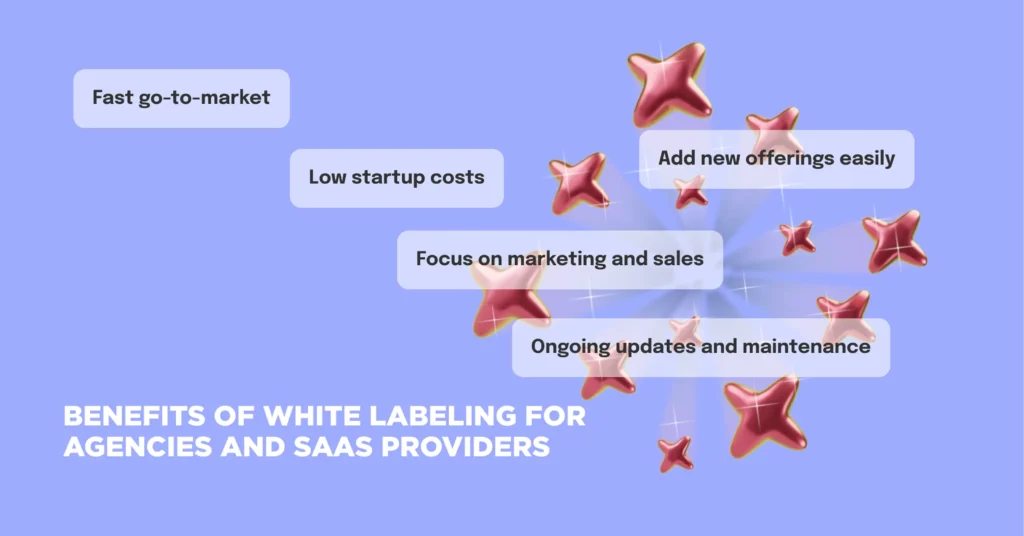
White label solutions remove a massive barrier to entry: you don’t need a dev team to launch a product. That opens up huge growth opportunities.
Here’s what makes the model so powerful:
- Fast go-to-market – Launch a product in days, not months
- Low startup costs – No R&D, no engineers, no servers
- Focus on marketing and sales – You grow the business while the provider handles the tech
- Add new offerings easily – Expand your service menu with no overhead
- Ongoing updates and maintenance – The white label provider keeps improving the product for you
For many agencies, this is how they transition from hourly billing to scalable, product-based revenue.
Use Cases: Where White Label Solutions Work Best
White label isn’t limited to software—it works across industries. Here are the most common and effective use cases:
- Marketing agencies. Sell email platforms, SEO dashboards, or social scheduling tools under your own name.
- SaaS startups. Use white label CRMs or automation tools as a base to serve a specific niche.
- IT companies. Offer white label helpdesk, cloud hosting, or managed services.
- eCommerce businesses. Launch private label storefronts or dropshipping platforms.
- Booking & event services. Sell appointment systems, event check-in software, or calendars to local businesses.
- Coaches & consultants. Rebrand eLearning platforms, course hosting, or chatbot tools to scale your brand.
How to Choose the Right White Label Partner
Not all white label vendors are created equal. Your provider will be the backbone of your business—choose wisely.
Here’s what to look for:
- Stability and track record. Do they have clients already using the platform successfully?
- Branding options. Can you fully customize the interface, domain, emails, and help docs?
- Support and documentation. Is onboarding fast? Can you get help when you need it?
- API access and integrations. Will it connect easily to your existing stack?
- Flexible pricing and scalability. Can you grow without getting locked into a rigid or expensive plan?
Common Myths About White Labeling (And the Truth)
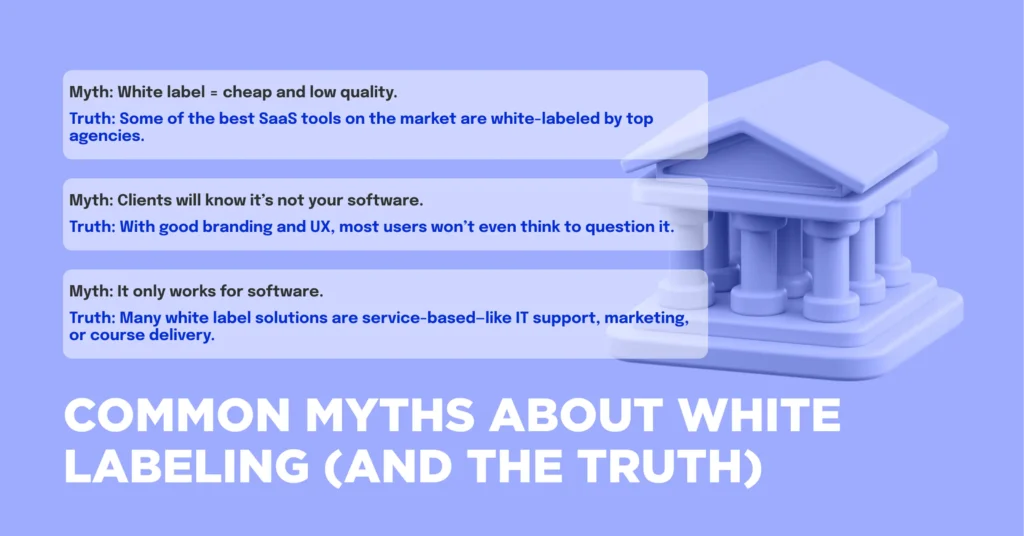
There are a few misconceptions that still hold some businesses back. Let’s clear them up:
- Myth: White label = cheap and low quality
Truth: Some of the best SaaS tools on the market are white-labeled by top agencies. - Myth: Clients will know it’s not your software
Truth: With good branding and UX, most users won’t even think to question it. - Myth: It only works for software
Truth: Many white label solutions are service-based—like IT support, marketing, or course delivery.
White label is about ownership of experience, not codebase.
From White Label to Market Leader: How to Reach the Top
You don’t need to build the next HubSpot from scratch. Some of the fastest-growing agencies in niche verticals got there by taking a smart white label solution and positioning it better.
Here’s how to move from reseller to category leader:
- Pick a niche – fitness studios, salons, law firms, real estate agents
- Adapt the product – modify terminology, workflows, and visuals
- Own the support layer – create help docs, onboarding flows, and training
- Bundle services – combine your software with strategy, design, or consulting
That’s the strategy behind “white label reach to the top”—you take a generic tool and make it feel like it was built just for your audience.
Getting Started with White Label: First Steps
Want to dip your toes in the water? Here’s a lean way to get started:
- Define your audience and their pain points
- Research white label providers that serve your space
- Launch a branded MVP—just enough to test traction
- Create a landing page, offer, and onboarding flow
- Gather feedback and refine the positioning
- Build client support and marketing playbooks
You can go from idea to revenue in under 30 days—with no dev work at all.
Conclusion: Build Smart, Scale Fast
White label isn’t a shortcut—it’s a smart strategy.
You don’t need to be a developer to run a product business. You just need the right solution, the right market, and a clear brand.
Whether you’re an agency, startup, or consultant, white label can help you scale faster, reduce risk, and focus on what you do best: delivering value.
Ready to launch your white label service?
We help agencies and startups find the right white label solutions and turn them into scalable businesses.
Let’s talk.

Free website strategy session with a senior web expert
For over a decade, we’ve helped startups, SaaS companies, and service brands build high-performing websites that drive real results. Whether you’re planning a redesign, launching a new product, or need to scale your platform—our technical and UX expertise can help you move faster and smarter.
Ready to talk? Connect with a lead developer at Hutko.dev for a FREE 30-minute strategy call. Let’s map out your next step, together.
Book a Free Call
