



Why Quick Commerce Isn’t Just a Delivery Trend — It’s a Startup Model

- What Quick Commerce Really Means for Ecommerce Development
- White Label Delivery Platforms vs Building From Scratch
- What Startups Really Need to Launch a Q‑Commerce MVP
- The Tech Infrastructure Behind Instant Delivery
- Scaling Beyond MVP: What Founders Should Plan For
- The Hidden Challenges in Q‑Commerce for Tech Teams
- Case Study Glimpse: What Success Looks Like
- Q‑Commerce Is the New MVP for Smart Ecommerce Startups
In 2025, q-commerce isn’t just fast delivery—it’s a business model oriented around micro-orders, real-time stock updates, and ultra-local fulfillment. The rise in consumer demand for groceries, essentials, and prepared meals delivered within minutes has created a new vertical in ecommerce.
Today’s startups aren’t building classic online stores with endless catalog menus—they’re setting up systems built for speed, repeat orders, and location-specific inventory. Q-commerce enables this: fewer warehouses, faster turnover, higher unit economics per delivery slot.
For startups, quick commerce isn’t just a convenient feature—it’s a strategy that maximizes revenue per square foot, reduces inventory drag, and offers a better on-demand experience. It changes how ecommerce development is done.
What Quick Commerce Really Means for Ecommerce Development
Unlike traditional ecommerce, q-commerce centers on:
- Order velocity: micro orders of 3–5 items, multiple times per day.
- Real-time inventory: customers expect “in stock now” guarantees.
- Geo-fencing & routing: delivery radius limitations, courier logistics.
Developers need instant data pipelines, real-time status updates, and edge-optimized APIs. This often requires backend-first stacks—Laravel or Node.js with WebSocket streams and fast cache layers—rather than no-code or monolithic ecommerce platforms.
A q-commerce solution also demands driver apps, customer apps, and admin dashboards synced live—all underpinned by stable latency-sensitive architecture.
White Label Delivery Platforms vs Building From Scratch
Startups must decide: go custom or use a white label delivery platform for startups?
White label platforms typically include:
- Customer mobile app (ordering)
- Driver app with GPS delivery tracking
- Admin panel for managing inventory and orders
- Customer and driver notifications
These solutions reduce initial build time significantly. However, they may lack custom workflows, branding flexibility, or local integrations.
By combining a core white label stack with custom UI or integrations, a startup can launch a q-commerce MVP for startups in around 30 days—while saving development costs. From there, features like loyalty, dynamic pricing, or advanced dispatch can be added.
What Startups Really Need to Launch a Q‑Commerce MVP
Launching a quick commerce MVP isn’t about building a flashy website—it’s about building a working system that moves fast, adapts quickly, and delivers locally. In a space where customers expect their orders in under 30 minutes, the way you approach development has to reflect that urgency.
So what exactly should your MVP include to make sure it doesn’t fall apart under real-world conditions?
The Technical Foundation
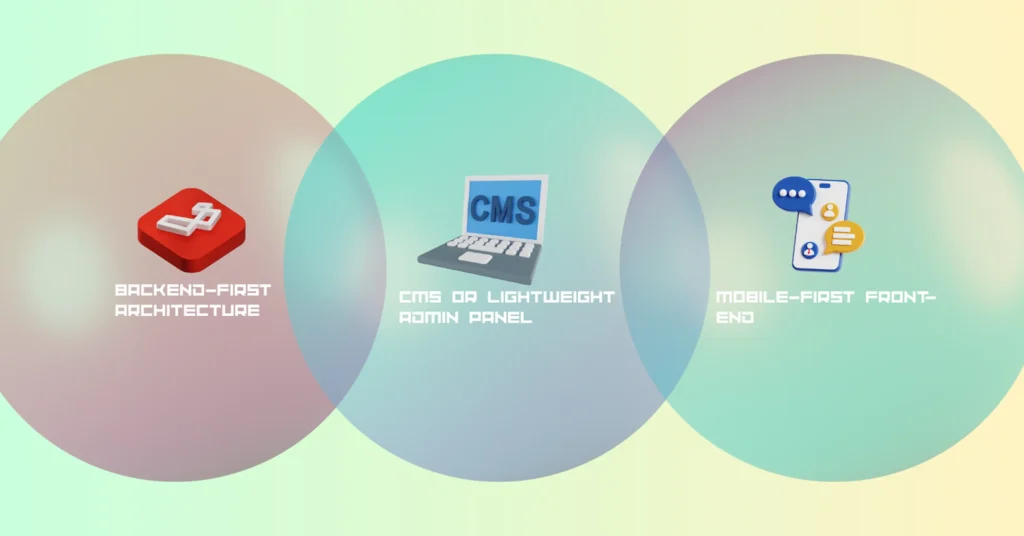
Before anything else, your platform needs a solid technical setup that can support fast-moving logistics:
- Backend-first architecture – A strong API layer (Laravel or Node.js) that handles orders, users, locations, and inventory in real time.
- Headless CMS or lightweight admin panel – So your team can make quick updates without asking devs to redeploy.
- Mobile-first front-end – Customers should be able to place and track orders easily on their phones from day one.
This foundation is what allows everything else to work. If your backend is too rigid, or your admin panel clunky, you’ll burn time fixing problems instead of growing.
Features Unique to Q-Commerce
Speed isn’t a nice-to-have in Q-commerce—it’s everything. Your MVP should include features that reflect this focus on real-time, location-based service:
- Geolocation and service zones – Deliveries need to be routed based on where the customer is and which courier or store is closest.
- Live order tracking – Customers expect to see exactly where their courier is. And they’ll message support if they don’t.
- Time-sensitive logic – Your backend must enforce cutoffs and notify the user if delivery isn’t possible in time.
- Push notifications – Real-time updates are essential to keep users and couriers in sync.
These features might sound “advanced,” but they’re baseline expectations for any serious Q-commerce platform. Even in an MVP, these basics must work reliably.
A Practical Tech Stack
Now comes the question of how to actually build it. Your tech stack doesn’t have to be fancy—it just has to work. And it has to support iteration.
- Laravel or Node.js for your API—ideal for flexibility and integrating with third-party services like Stripe or Twilio.
- Vue.js or React for building a responsive, app-like interface.
- Firebase (or Supabase) to handle real-time data sync between couriers, customers, and inventory.
- Google Maps SDK for tracking and route calculation.
- If you’re testing the idea fast, Webflow + Airtable can even be enough for early user feedback and order validation.
Depending on your resources, a hybrid approach (custom backend + no-code front) might get you live faster. Especially if you’re not starting from scratch, a white label delivery platform for startups can give you 70% of the system, leaving you to focus on branding and core flows.
Q-commerce MVPs are not websites—they’re systems. Systems that need to operate in real time, across locations, and under pressure. What you build in your first version should mimic the full experience without trying to do everything at once.
Focus on one flow: the user places an order, the backend processes it, and a courier gets it delivered—fast. If that works, you’re already ahead of most early-stage competitors.
And if you’re short on time or internal tech resources, pairing a white label ecommerce development stack with a small but experienced outsourced team is often the fastest way to market.
The Tech Infrastructure Behind Instant Delivery
A Q‑commerce system often includes:
- Micro-fulfillment layers: quickly locate closest stock and nearest courier
- Status streams: order statuses pushed live
- Payment gateways: Stripe or another processor
- Notifications via Twilio or push services
- Routing through Google Maps APIs
- Webhooks to sync courier updates to admin and user UIs
When using a white label wp development path, you can plug in pre-built backend modules and focus on custom UI or tech integrations tailored to your user base.
Scaling Beyond MVP: What Founders Should Plan For

A Q‑commerce MVP is just the beginning. To scale, you’ll need:
- Inventory system upgrades (auto restocking, stock notifications)
- Customer retention modules (loyalty points, subscriptions)
- Automated marketing integrations (email/SMS)
- Improved tech infrastructure as user volume grows (caching, load balancing)
Technical bottlenecks often emerge around database performance, unstable push notifications, or slow routing APIs. Address these early to avoid surprises when growing from 100 to 5,000 orders per day.
The Hidden Challenges in Q‑Commerce for Tech Teams
Technical challenges in q-commerce go beyond coding:
- Unit economics vs. latency: each delay in backend processing reduces margins per delivery.
- DevOps demands: uptime matters—drivers and customers expect seamless service.
- White label is not zero-code: even pre-built systems need custom development, QA, localization, and branding customization. You’ll still need a strong internal or outsourced team.
If your startup relies on mixed platforms, engaging an outsourced ecommerce team ensures you get consistent delivery and customization without bloated internal hires.
Case Study Glimpse: What Success Looks Like
Some fast-growing Q‑commerce startups architecture highlights:
- Start with a white label API backend and custom frontend UI: saved $50K in dev costs by not building full backend.
- Scaled from 100 to 5,000 daily orders within months by adding geo-mapping, real-time stock sync, and loyalty flows.
This approach—mixing white label platforms for rapid MVP deployment with targeted custom builds—lets startups launch fast and scale smart.
Q‑Commerce Is the New MVP for Smart Ecommerce Startups
On-demand delivery is more than convenience—it’s the future of ecommerce for modern consumers.
Founders can avoid rebuilding every system from scratch: using white label delivery platforms for startups and combining them with coding expertise lets you build a fast, branded, functioning Q‑commerce MVP.
Want to test logistics demand without draining your budget? Let’s talk.

Free website strategy session with a senior web expert
For over a decade, we’ve helped startups, SaaS companies, and service brands build high-performing websites that drive real results. Whether you’re planning a redesign, launching a new product, or need to scale your platform—our technical and UX expertise can help you move faster and smarter.
Ready to talk? Connect with a lead developer at Hutko.dev for a FREE 30-minute strategy call. Let’s map out your next step, together.
Book a Free Call
